Oostmolenstraat 94, 9880 Aalter, Belgium Mon – Fri, 09:00 – 18:00 CET
Vanilla Beans wholesale supplier
Food & Groceries

Vanilla Beans — Wholesale Supply & Export

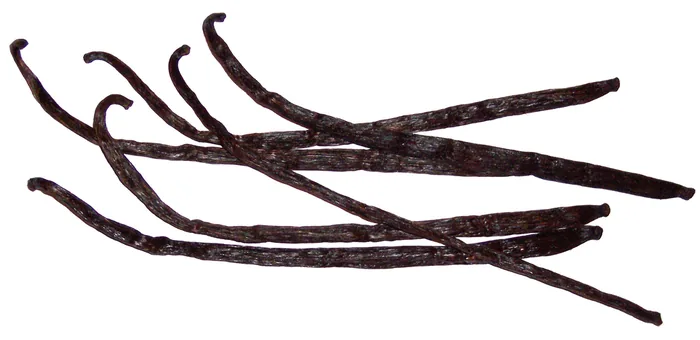
Premium whole vanilla beans in bulk for wholesale export. Aromatic vanilla pods for baking and flavouring, supplied from Belgium by pack, carton or pallet.

  • Gourmet, TK and extraction-grade beans quoted to specification
  • Vacuum packs, cartons, pallets and FCL quantities
  • Moisture, length grade and origin confirmed per lot
  • Handled and packed to EU food-safety requirements
  • Certificate of Origin, analysis and full export documentation
  • EXW, FOB, CIF and DAP Incoterms
Supplied by: case · pallet · full container load  |  Packaging: original manufacturer  |  Export: worldwide

Everyone selling vanilla beans writes premium, finest and hand-selected. None of those words appears on a purchase order. Vanilla is bought on grade, length, moisture, origin and aromatic strength, and a buyer who specifies those five things gets comparable offers from every supplier approached, while a buyer asking for "best quality vanilla" gets incomparable ones. This page is written to make that comparison possible. The line sits beside the rest of our ambient range, so you can browse food & groceries wholesale and consolidate, and it ships from Belgium to extract houses, patisserie and bakery groups, ice-cream and dairy producers, chocolatiers, distillers and premium retail packers.

Whole vanilla beans for professional production

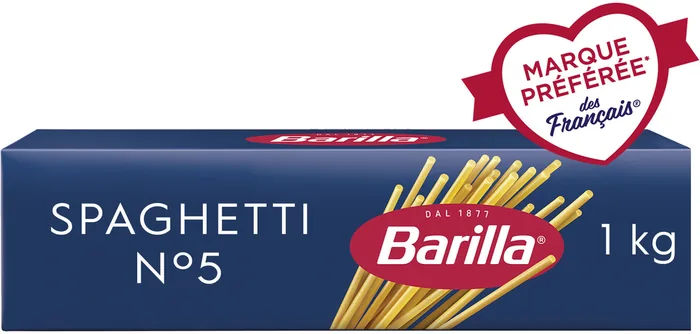
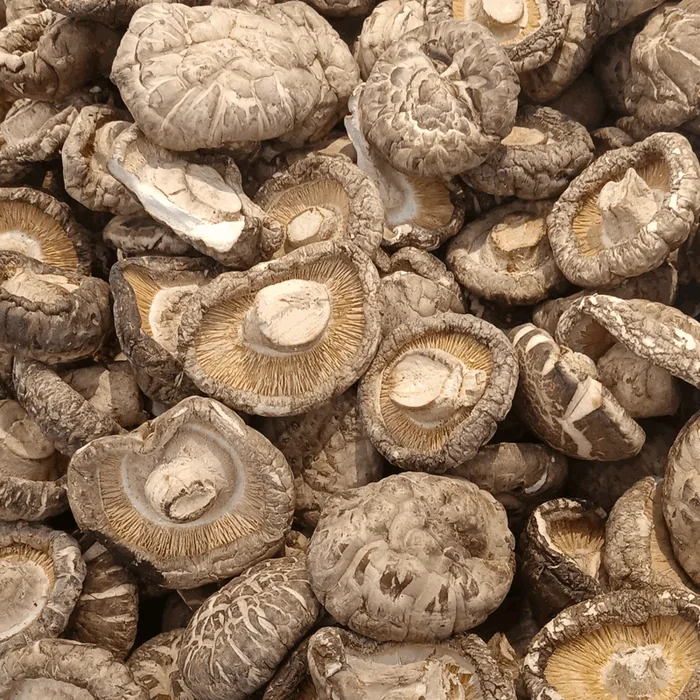
We supply whole cured pods vacuum-packed in food-grade barrier film inside export cartons, in kilo multiples, palletised and available in full container quantities for larger programmes. The reason to buy from a European consolidation point rather than a farm-gate exporter is not romance about origin; it is that the goods are already inside the customs territory you sell into, can be inspected before they are committed and can travel on a pallet alongside branded FMCG rather than as a standalone parcel. Buyers running a specialty ingredient range frequently quote Dried Shiitake Mushroom by the pallet on the same enquiry, and manufacturers rounding out an ambient grocery load add Barilla pasta to make the booking economic.

Grade and length: the vocabulary a vanilla order is written in

Three grade families cover almost all trade. Gourmet, often called Grade A, describes plump, supple, oily beans with the highest moisture, bought where the pod itself is seen — whole-bean retail packs, patisserie, chef-facing formats. TK sits between the two: drier than Gourmet, still presentable, and the practical choice for a producer who wants appearance without paying for water. Grade B, the extraction grade, is drier still and may include splits and cuts; it is what extract and flavour houses buy, because what they need is aromatic material rather than a photogenic pod. Length is quoted separately on an AAA, AA and A ladder defined in centimetres. No statutory standard governs any of this, so the terms drift between exporters — which is why the grade definition, the length band and the tolerances get written onto the pro-forma against the lot offered rather than left to a shared assumption.

Cost per unit of vanillin, not cost per kilo

Here is the calculation most wholesale pages avoid. Moisture and aromatic strength move in opposite directions: a drier bean carries more vanillin per gram than a plump one, because a share of what you weigh on the plump bean is water. So a lower-moisture extraction grade can deliver more aromatic compound per euro than a showpiece Gourmet pod, even when its price per kilo looks similar. The correct metric for a manufacturer is therefore cost per unit of vanillin delivered into the formulation, not cost per kilo of pods — and that comparison can only be made if the certificate of analysis for the specific lot states its moisture and vanillin content. For a retail packer the logic reverses entirely: appearance is the product, so the water is worth paying for. Both buyers are right; they are simply buying different things, and the enquiry should say which.

Origin and species: Bourbon, Tahitensis and what changes with each

Vanilla planifolia from Madagascar's SAVA region, traded as Bourbon vanilla, accounts for the large majority of world output and sets the reference aroma profile most formulations are built around. Uganda produces the same species on a different harvest calendar, which matters for continuity of supply. Indonesian beans are typically cured drier and are extraction-led. Papua New Guinea and Comoros supply smaller volumes. Vanilla tahitensis is a different species with a distinctly floral profile and a different bean structure, and it is not a substitute for Bourbon in a formulation that was developed on Bourbon. Origin therefore belongs in the specification alongside grade, because it drives both aroma and price, and because a reformulation triggered by an unannounced origin switch costs a producer far more than the saving that prompted it.

Vacuum packing, storage and the risk of a broken seal

Cured vanilla is a high-moisture product held in a stable state by its packing, which makes the vacuum the most important thing on the pallet. Beans travel vacuum-packed in barrier film inside cartons, stored cool, dry, out of direct light and away from strong-smelling goods, because pods take up ambient odour readily. The handling risk to manage is a compromised seal: once the vacuum is lost, the bean's own moisture works against it and surface mould becomes possible, so seals are inspected on receipt and before any part-pack returns to storage. Open only what you will process, re-pack promptly, and record the lot against each opened pack.

Why nobody can honestly publish a vanilla price list

Vanilla is among the most volatile soft commodities in ordinary trade. Prices move with the Madagascar harvest and its timing, with export policy and licensing at origin, with crop quality and cure, with speculation on carry-over stock, and with the buying cycles of a small number of large flavour houses. A published figure would be out of date before it was read, and a supplier quoting one is either quoting an allocation that has already sold or intends to revise it when you ask. What we do instead is quote same-day against the lot actually in stock: grade, origin, length band, moisture and vanillin as reported on the certificate of analysis, pack format, quantity and Incoterm, valid for a stated period. That is a number you can build a costing on, which a price list is not.

Traceability, analysis and non-EU-origin documentation

Vanilla is grown outside the European Union, so the document set reflects that rather than borrowing one that does not apply. A EUR.1 movement certificate evidences preferential EU origin and is generally not the applicable document for re-exported non-EU goods, so we do not offer one on this line. Consignments travel with a Certificate of Origin, a certificate of analysis for the lot, and a phytosanitary or health certificate where the destination authority requires it, alongside the commercial invoice, packing list and transport document. Traceability runs by lot back to the curing and packing operation. Where organic status is claimed, the certification chain has to be intact from the origin operator through every intermediary, and it should be requested explicitly at enquiry stage rather than assumed from a description.

What a vanilla enquiry should tell us

Six lines are enough: grade family, origin, length band, moisture or vanillin requirement if your formulation has one, pack format, and quantity with destination and Incoterm. Say whether the beans are going into extraction, into a visible retail or chef-facing format, or into a dairy, bakery or confectionery process, because that single sentence usually settles the grade question faster than a specification does. We reply with what is genuinely in stock, its analysis position, the packing and pallet configuration and the documents the lot can support.

High-value ingredients rarely justify a container on their own, so most buyers consolidate. Weight and volume come from ambient branded lines on the same booking — Heinz by the pallet and Hellmann's by the pallet for the table-condiment fixture, Knorr by the pallet where a bouillon and seasoning range is being listed — which spreads the freight across a much larger invoice and puts one document set behind the whole arrival.

If a first ingredient import is being planned rather than repeated, our sourcing guide, written for buyers of Vanilla Beans and other high-value lines, covers counterparty checks and the paperwork sequence.

Specifying the lot before the pro-forma

Allocations on a volatile commodity are held against accounts rather than enquiries, so open an account to order Vanilla Beans before the grade and volume are fixed. Grade family and origin, length band, the analysis position for the lot, pack format and kilo multiple, pallet configuration, Incoterm, validity of the offer and the document set are then all confirmed in writing on the pro-forma against that specific lot. Nothing is carried across from an earlier shipment, because here the earlier shipment is a different harvest.

Price vanilla beans against your grade and volume

Tell us the grade, origin, pack format and destination — request an offer covering Vanilla Beans and we will return the lot position, its analysis and a detailed quotation within 24 hours.