Oostmolenstraat 94, 9880 Aalter, Belgium Mon – Fri, 09:00 – 18:00 CET
Pampers wholesale supplier
Baby & Family Care

Pampers — Wholesale Diaper Supply from Belgium

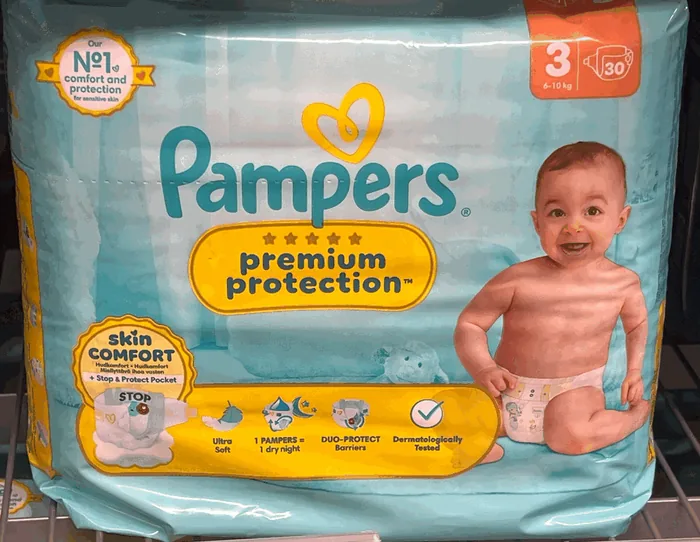
Pampers wholesale supplier in Europe: taped diapers, Pants and wipes across the full size ladder, EU-sourced and exported from Belgium by pallet or full container load.

  • Range: Baby-Dry, Premium Protection, Pants and baby wipes
  • 100% authentic, EU-sourced, original manufacturer packaging
  • Order by case, pallet or full container load (FCL); LCL available
  • EXW, FOB, CIF and DAP Incoterms available
  • Full export docs incl. EUR.1 and Certificates of Origin
  • 24-hour quotes with dedicated account management
Supplied by: case · pallet · full container load  |  Packaging: original manufacturer  |  Export: worldwide

Nobody who buys Pampers at wholesale is really buying a brand — the brand decision was made for them by the shopper. What they are buying is a size curve, and getting that curve right for a destination market is the one decision on this line that separates a container that sells through in weeks from one that leaves a pallet of the wrong size sitting in the warehouse for a year. FMCG Depot is a Belgium-based wholesale distributor and exporter, and Pampers sits inside our baby & family care wholesale catalogue alongside the rest of the hygiene aisle, shipped from Aalter through Antwerp and Rotterdam to more than 60 countries.

Building the size curve for your destination market

Diapers are ranged as a ladder, from newborn packs at the bottom to the larger junior sizes at the top, and no two markets rotate that ladder in the same proportions. Birth rates, the age at which children move out of diapers, the split between modern trade and independent retail, and purchasing power all pull the curve in different directions. A market whose volume goes through supermarkets buys the middle of the ladder in big counts; a market served by independents and kiosks takes smaller packs across a wider spread of sizes. We publish no percentage split for this, because yours is not your neighbour's. We quote against the split you specify, and if you do not have one we work it through on the enquiry from the destination, the channel and the counts you can shelve.

Format families and what each one does in the fixture

The taped ranges — Baby-Dry through Premium Protection — are the backbone of the ladder and carry the widest size coverage. Pants sit above them for the walking and toddler stages and are ranged in fewer sizes but higher counts. Baby wipes complete the basket and behave commercially like an impulse add-on rather than a planned purchase, so they are usually ordered against the diaper volume rather than independently. Pack counts run from small carry packs through to the large value counts that anchor a supermarket listing, and the count you choose changes both your shelf price and, as below, the number of cases that fit in the box. Buyers assembling a wider personal-care basket from the same manufacturer's portfolio often price the Gillette export listing at the same time.

  • Taped diapers across the full numbered size ladder
  • Pants formats for the walking and toddler stages
  • Baby wipes in singles and multipack counts
  • Carry packs through to large value counts by channel
  • EU-market artwork, original manufacturer packaging
  • Batch and date coding intact for full traceability

EU-series and US-series stock, and why buyers ask

This is the most common qualifying question we get on diapers and it deserves a straight answer. Diapers produced for different regions carry different sub-brand names, size nomenclature and count conventions, and different language sets and declaration formats on the pack. A buyer whose market has been supplied from North America for years is used to one naming system; European stock uses another. Neither is a substitute for the other on a shelf where shoppers repeat-buy by pack appearance. What we supply is EU-market stock in original manufacturer packaging. If your listing was built on the other convention, say so at enquiry stage, because it changes which sizes and which sub-ranges map onto your existing shelf plan, and that mapping is confirmed in writing on the pro-forma before anything is loaded.

Why diapers are bought by the container, not the pallet

Diapers are the archetypal volumetric cargo. Compressed poly packs are extremely light for the space they occupy, so a diaper load reaches the cubic capacity of the box long before it comes anywhere near its permitted payload. The commercial consequence is direct: freight on this line is paid for space, not weight, and the cost per pack falls steeply as you move from part-loads to a full container. That is why serious diaper buying happens in full container loads, and why part-pallet quantities of diapers are usually the most expensive way anyone ever buys them. We do supply case and pallet quantities, and there are good reasons to take them — testing a new size split, topping up a gap, seeding a listing — but a buyer planning a year of supply should be modelling the container.

“How many pallets fit in a container?” — what actually decides it

It is the right question and it has no fixed answer, so here is what governs it rather than a number you could not rely on. Size mix comes first: newborn packs and junior packs are two different loading problems, because they differ in volume for the same case. Then the outer carton dimensions of the counts selected, the pallet specification your destination accepts, whether the cartons carry a further tier without deforming the packs beneath, and the container type booked. Change any one and the answer moves. We calculate the build against the exact case mix on your enquiry and state the carton count, the pallet build and the loading plan in writing on the pro-forma against the allocation offered — before you commit, not after the box is sealed.

Compression packs, palletisation and packaging integrity

Packaging integrity matters more here than anywhere else in the category, because the pack is a compressed poly bag rather than a rigid carton, and it is the pack the shopper picks up. A split seam or scuffed print face is unsaleable at full price even though the contents are fine. That puts the emphasis on the pallet build: consistent tier alignment so no pack carries a point load, shrink-wrapping that holds the stack without crushing the top tier, corner protection where the build calls for it, and a stow plan keeping light pallets out from under heavy ones. We note the build on the packing list so the receiving warehouse can check it against what arrives.

Documents and routing for a diaper container

Goods move EXW, FOB, CIF or DAP with a commercial invoice, a packing list itemised to case level, and EUR.1 movement certificates or Certificates of Origin issued where your entry requires them. Our logistics pages explain what each of those does and when preferential origin is worth requesting; the point specific to this line is that a diaper packing list has to reconcile size by size, because customs and your own goods-in team will both count it that way.

Consolidating the rest of the load

A diaper container that cubes out with payload to spare is an argument for mixing, and the natural partners are dense household lines bought by the same households. Importers regularly add Tide by the pallet where Tide is the laundry name their market recognises, or the Ariel export listing where it is Ariel, and either turns unused payload into saleable stock. Oral care does the same job in a smaller footprint, so the Colgate export listing is a common third line, and feminine care from our Always sanitary pads range shares the same shelf and the same reorder cycle. Mixed loads are quoted as one shipment, on one set of documents, under one Incoterm.

Before you fix the ordering rhythm

Diaper demand is steady and forecastable, which makes it a candidate for holding stock near the market rather than shipping to order. If duty timing or working capital is shaping how often you buy, our explainer on holding duty-suspended stock is worth reading before you set the pattern, because it changes what quantity you should be asking us to price.

Confirming the size split before we quote

Send the destination market, the channel and either your intended size split or your current sell-through by size, and the quotation comes back against that rather than against a generic case list. Everything then settles on a written pro-forma: sub-ranges and counts, the size split, case and pallet build, quantity, dating, price and Incoterm. Case, pallet and full container load quantities are all available, and the quantity that suits you is governed by format, destination and whether you are mixing lines, not by a published threshold. New accounts register before we quote Pampers, which lets us verify EORI and VAT details once and price properly from then on.

Price a Pampers container for your size mix

Send your target quantity and destination — we'll return a detailed quotation within 24 hours. Include your size split if you have one, or ask for pricing on Pampers and we will work it through with you.