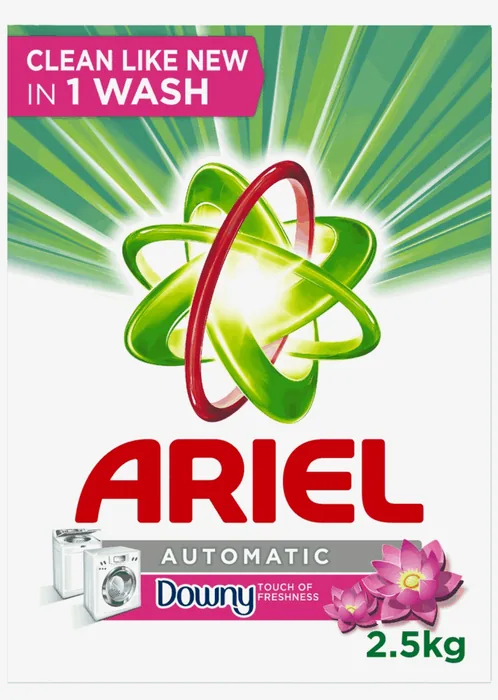
Ariel Detergent — Wholesale Supply from Belgium
Ariel detergent wholesale supplier in Europe: capsules, washing powder and liquid, EU-sourced and shipped from Belgium by case, pallet or full container load.
- Range: Ariel powder, liquid detergent and Pods, multiple pack sizes
- 100% authentic, EU-sourced, original manufacturer packaging
- Order by case, pallet or full container load (FCL); LCL available
- EXW, FOB, CIF and DAP Incoterms available
- Full export paperwork incl. EUR.1 and Certificates of Origin
- 24-hour quotes and dedicated account management
The mistake most first-time detergent importers make is treating Ariel as one line. It is three: capsules, powder and liquid are different weights, different cube, different destination markets and different handling, and the format you choose changes your freight bill, your shelf price and your clearance paperwork more than the brand choice ever will. FMCG Depot is a Belgium-based wholesale distributor and exporter, and Ariel sits inside the household & cleaning export range we ship from Aalter through Antwerp and Rotterdam. This page is a format-selection guide first and a brand description second.
Pods, powder and liquid are three different export businesses
Capsules carry the highest value per cubic metre in the category, which makes them the most freight-efficient thing on this page and the format that suits long lanes and premium retail. They also carry the most packaging and labelling considerations, covered below. Powder is the workhorse of the export trade: dense, robust, tolerant of long transits and warehouse conditions, sold in sachets and small bags at the value end and in large boxes and bags for family shopping. Liquid sits between the two commercially but is the hardest of the three to move economically, because you are paying freight on water. Buyers frequently range two formats rather than one so that a single fixture covers both a value and a convenience price point, and buyers whose destination shelves the other big laundry name source Tide in bulk on the same offer.
- Capsules — tub and pouch counts for premium and modern-trade fixtures
- Powder — sachets, bags and boxes across value and family formats
- Liquid — concentrated and standard bottle formats
- Colour, universal and regional variant labelling on request
- Genuine brand-owner stock in original manufacturer packaging
- Batch and date coding intact for full traceability
Wash loads, not pack weight, are how the shelf compares detergent
Every serious detergent merchandiser in the world prices by wash load, and buyers who cost by pack weight instead end up with an uncompetitive shelf. The reason is dosage: a concentrated liquid, a capsule and a conventional powder deliver a different number of washes per kilo of product shipped, so two packs at the same weight are not the same offer to a shopper, and the pack that looks cheapest per kilo on your purchase order can be the most expensive per wash on the shelf. Build your landed-cost model per wash rather than per kilogram before you decide the format split. Ask us for the declared wash count on the specific packs you are considering and we will confirm what the available stock states, rather than quoting a figure from memory.
Why a detergent container weighs out before it cubes out
Detergent is the densest cargo in this catalogue and it behaves accordingly. A container loaded with powder or liquid reaches its permitted payload with the box visibly part-empty, which is the exact inverse of the hygiene lines that share the same warehouse. Three practical consequences follow. First, the ceiling on your order is a weight ceiling, so the useful question is not how many pallets fit but how much weight the lane and the equipment permit. Second, road haulage limits at both ends bite earlier on detergent than on anything else, and they vary by country. Third, an all-powder load leaves cube unused, which is why powder is the best thing in the building to pair with bulky, light stock. What the ceiling actually is for your booking depends on the format mix, the pack sizes, the pallet specification and the container type, and it is confirmed in writing on the pro-forma against the allocation offered.
Handling, packaging and labelling for liquids and capsules
Powder is the least demanding format to ship; liquids and capsules are not, and a buyer should know why before committing to a load. Liquids carry closure-integrity and secondary-packaging considerations, and any leakage in transit damages the cartons around it rather than just the unit. Capsules are sold in tubs and pouches with child-resistant closures and specific storage requirements, and both liquids and capsules fall under detergent labelling and classification rules in the EU, with hazard and precautionary information printed on pack. We do not assert a classification for any individual SKU here, because that attaches to a specific formulation and a specific pack rather than to a brand. What we do is confirm, for the exact stock offered, what the pack carries, and flag anything that affects packing, stowage or the documents your destination expects. Some destinations require additional labelling at import, which is arranged against a defined specification at your end — we supply in original manufacturer packaging and do not overlabel.
Where each Ariel format actually sells
Format demand tracks geography closely enough to plan around. Powder dominates the import channels of much of Africa and large parts of the Middle East, where value formats, hand-washing habits and price-per-wash sensitivity all point the same way, and where the robustness of a sealed powder pack through a long transit is an advantage in itself. Capsules index to European retail and to Gulf modern trade, where convenience formats have taken real fixture space and the higher unit price is supported. Liquid sits strongest in European and Eastern European retail and travels less well the further the lane. Eastern European and Balkan importers typically want a full ladder across all three. These are the patterns in our enquiry book rather than a market study, but they are a sound starting point when you are deciding what to put in the first container.
Documents and delivery for a detergent consignment
Goods move EXW, FOB, CIF or DAP with a commercial invoice, a packing list itemised to case level, and EUR.1 movement certificates or Certificates of Origin issued where your entry requires them. Our logistics pages set out what each document does and when preferential origin is worth requesting. The detail specific to detergent is that the weight declared on the packing list has to reconcile with the axle and payload limits at both ends of the lane, so we state the gross and net build before loading rather than after. First-time trade buyers set up through wholesale registration so EORI and VAT details are verified once.
Consolidating the rest of the container
Because a detergent load runs out of weight before it runs out of space, the sensible companions are light, bulky, fast-rotating lines that use the cube a dense pallet leaves behind. Grooming does this well: Gillette wholesale supply is high value in a small, light footprint and sells to the same retail buyer. Hygiene does it better still, because Always wholesale supply and Pampers by the container are the bulkiest, lightest things we ship, and a few pallets of them turn a half-empty detergent box into a full one. Oral care, through Colgate wholesale supply, is the usual third line. Mixed loads are quoted as one shipment, on one set of documents, under one Incoterm.
Before you set the ordering pattern
Detergent is heavy, high-volume and duty-relevant, which makes where you hold it a real commercial question rather than an administrative one. Our explainer on bonded warehousing explained covers when holding stock under duty suspension near your market beats shipping to order, and it is worth settling before you decide the quantity you want us to price.
Household and care lines that share a detergent load
Agreeing formats, quantities and paperwork on the pro-forma
Send the destination, the channel and the format split you are considering, and the quotation comes back against that rather than against a generic list. Everything then settles on a written pro-forma: formats and pack sizes, quantities, case and pallet build, gross and net weights, dating, price and Incoterm. Case, pallet and full container load quantities are all available, and the quantity that suits you is governed by format, weight, destination and whether you are mixing lines, not by a published threshold. If you have not traded with us before, how we source and verify stock explains where the goods come from and how authenticity and batch traceability are checked before anything is offered.
Price an Ariel load by format
Send your target quantity and destination — we'll return a detailed quotation within 24 hours. Tell us which formats your shelf runs and get a costed offer built around the split rather than a single SKU.